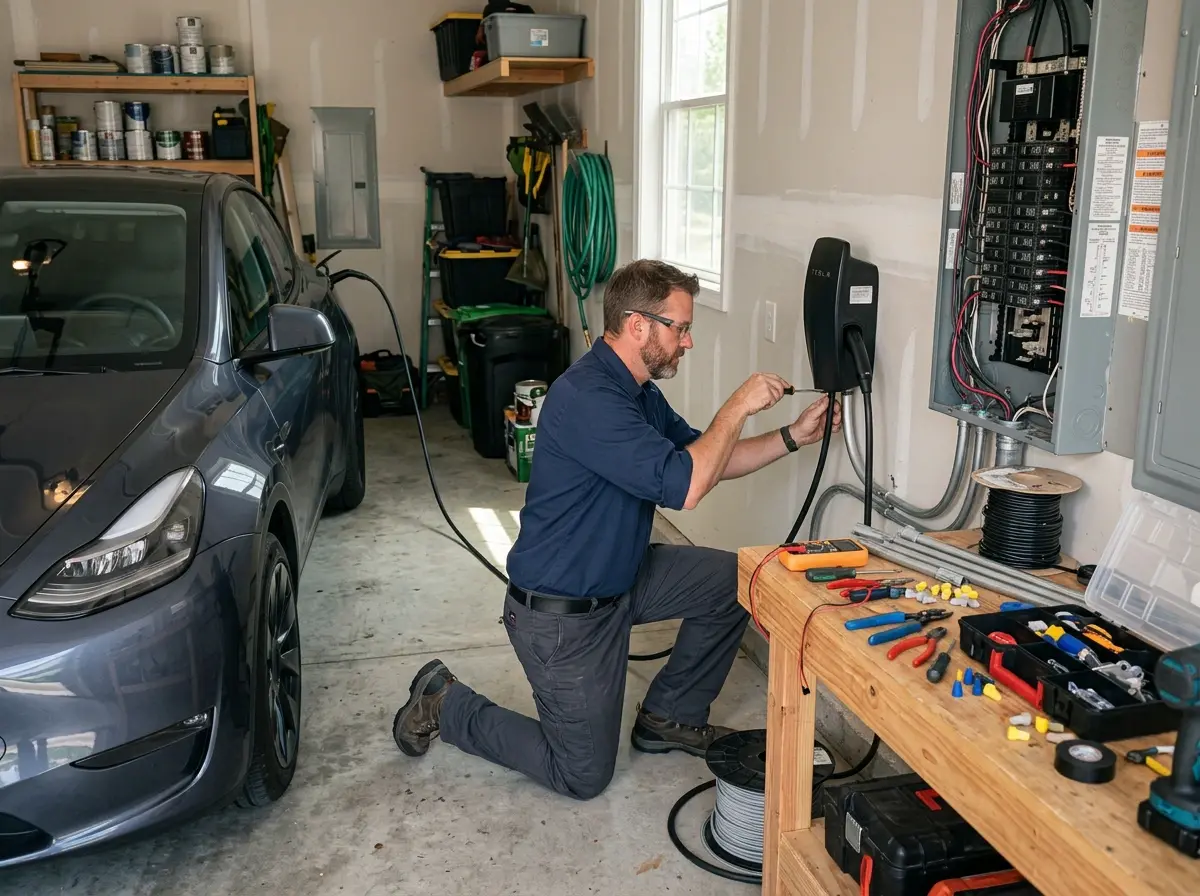
EV Charger Installation in Douglas – Safe, Fast, and Code-Compliant Home Charging
Owning an electric vehicle is fantastic until you rely on a standard 120V outlet. At that rate, adding 50 miles of range takes 10-15 hours. Level 2 charger installation cuts that to just 1-2 hours. But installing an EV charger is not as simple as adding a dryer outlet. It requires precise EV charger load calculation to avoid overloading your panel, proper wire sizing to prevent overheating, and often an electrical panel upgrade for EV charger to handle the additional 30-60 amp draw. Many homes in Douglas have older 100-amp panels that cannot safely support a high-power EV charger alongside central air, an electric dryer, and other modern appliances. Our organization provides complete EV charger installation for residential properties in Douglas. We do not cut corners because charging an EV for hours at maximum current pushes every connection to its limit.
What Our EV Charger Installation Service Includes
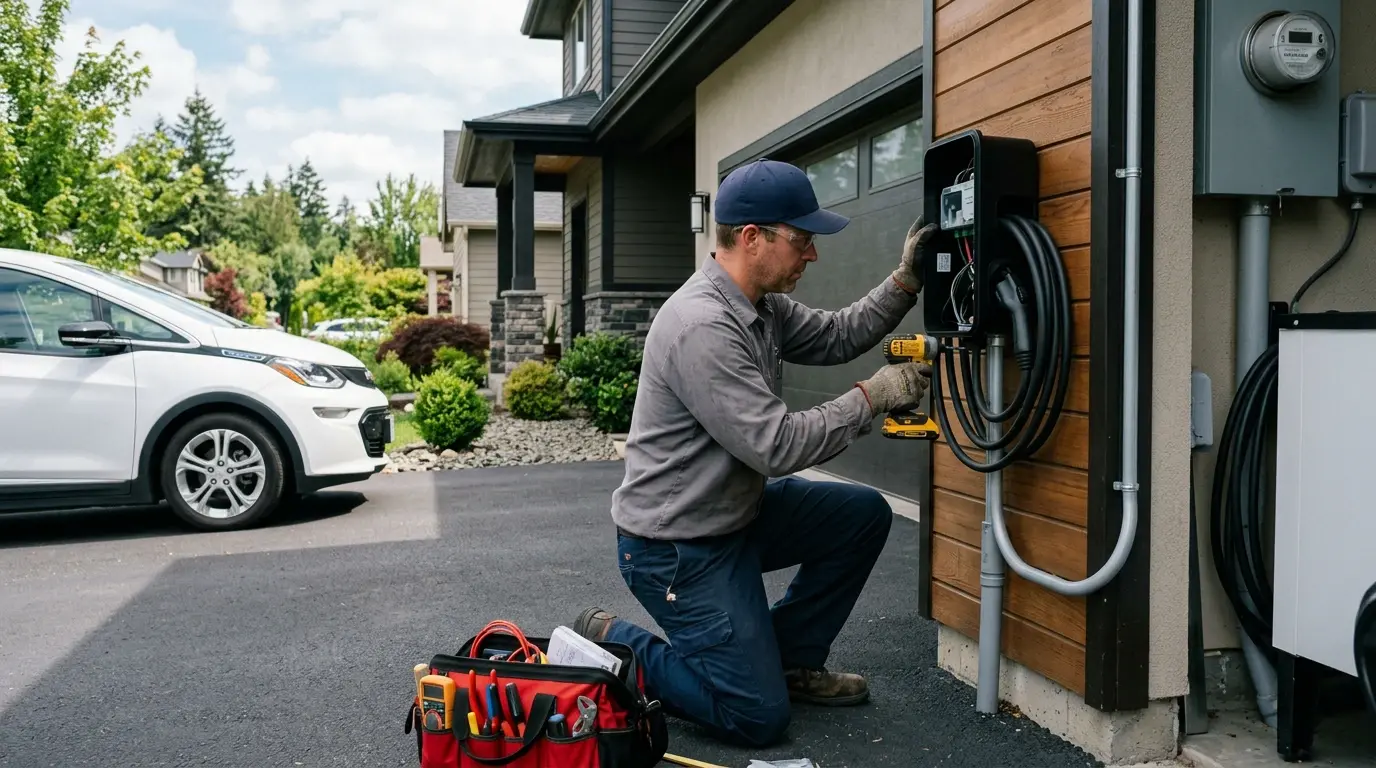
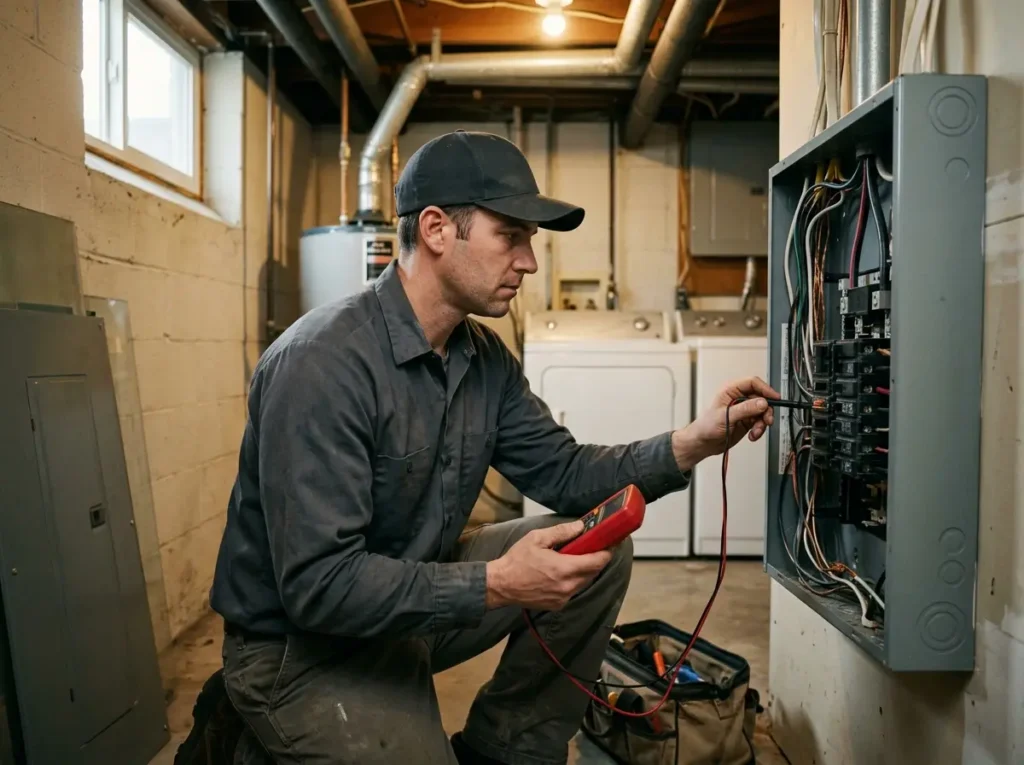
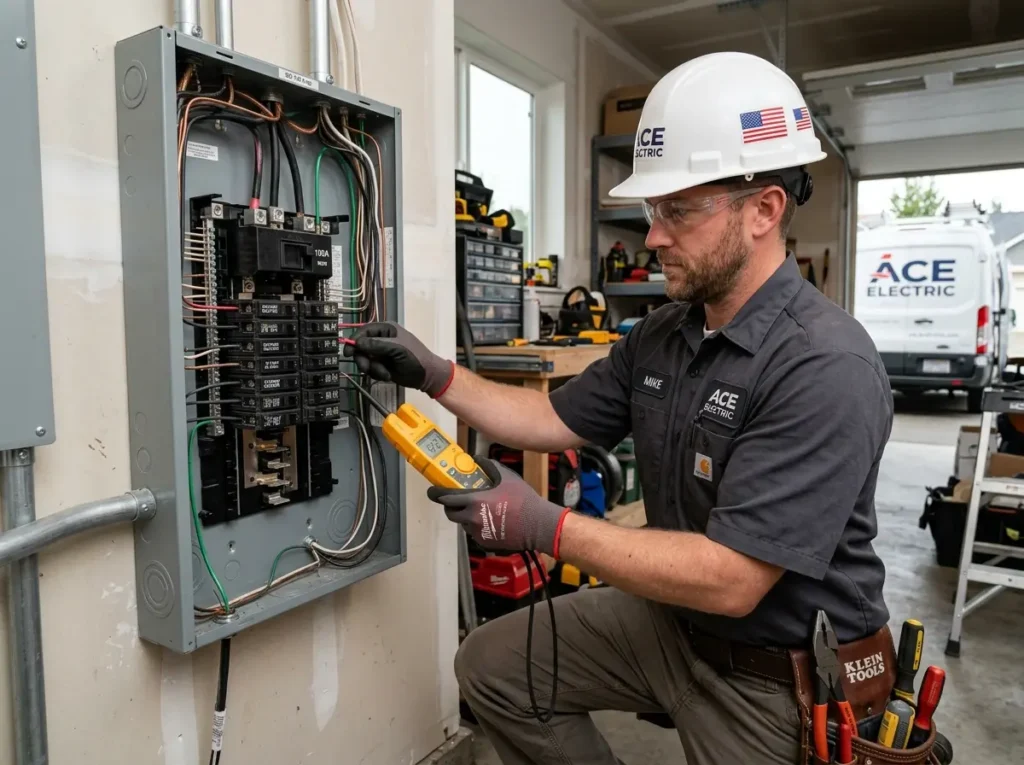
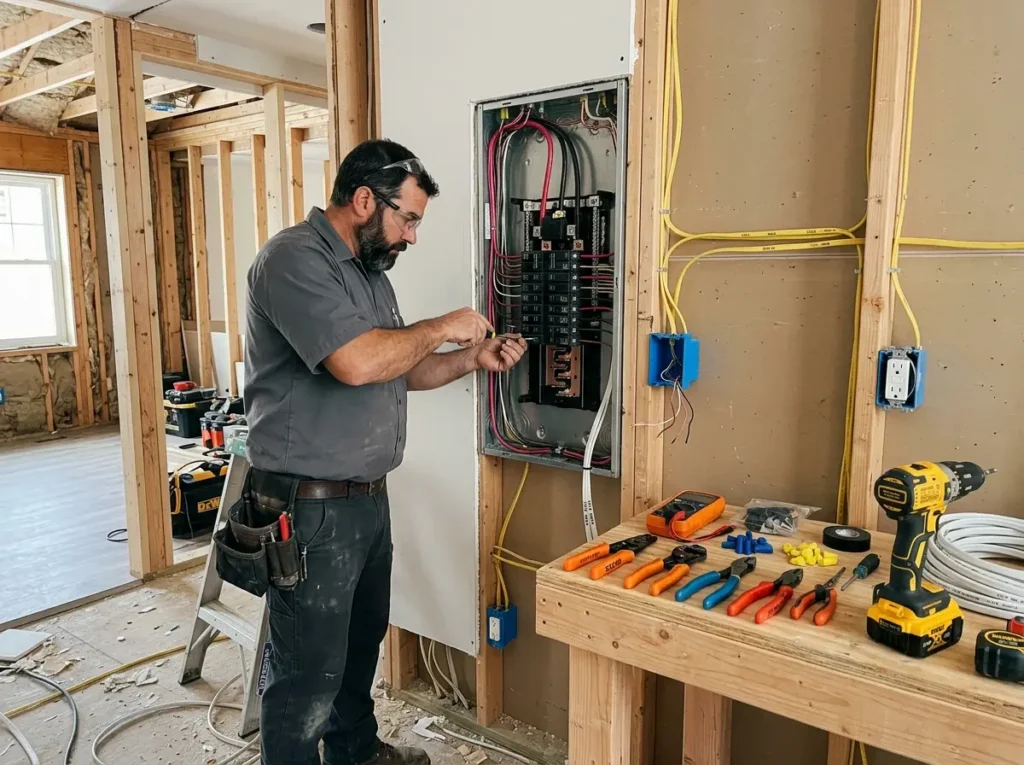
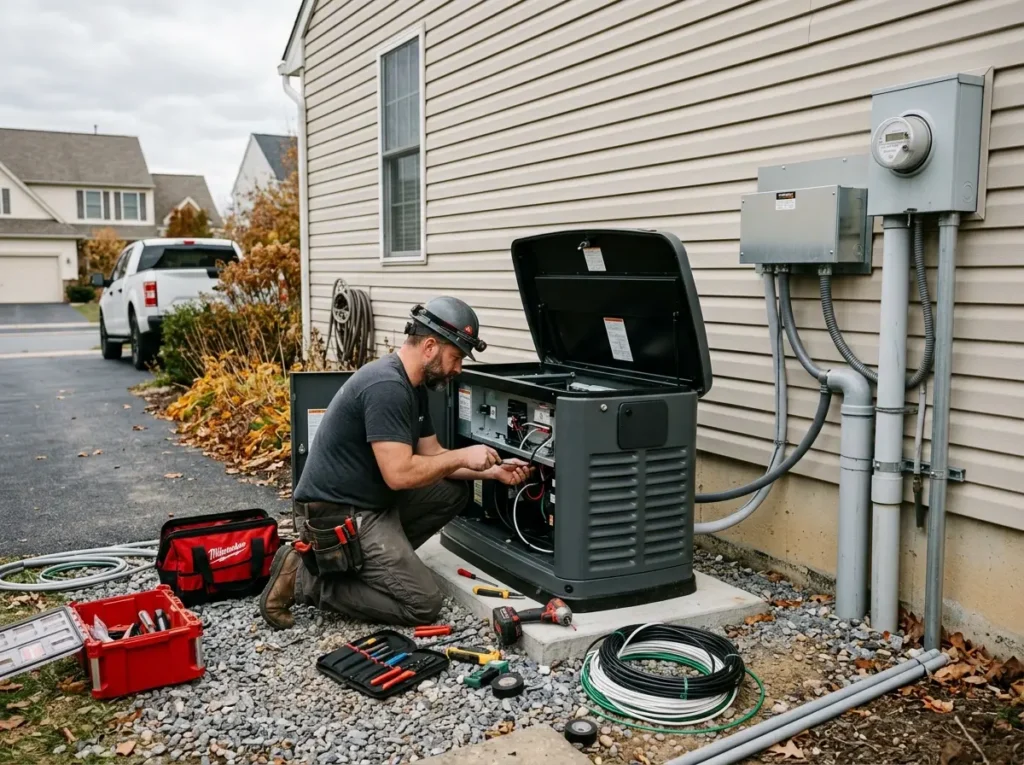
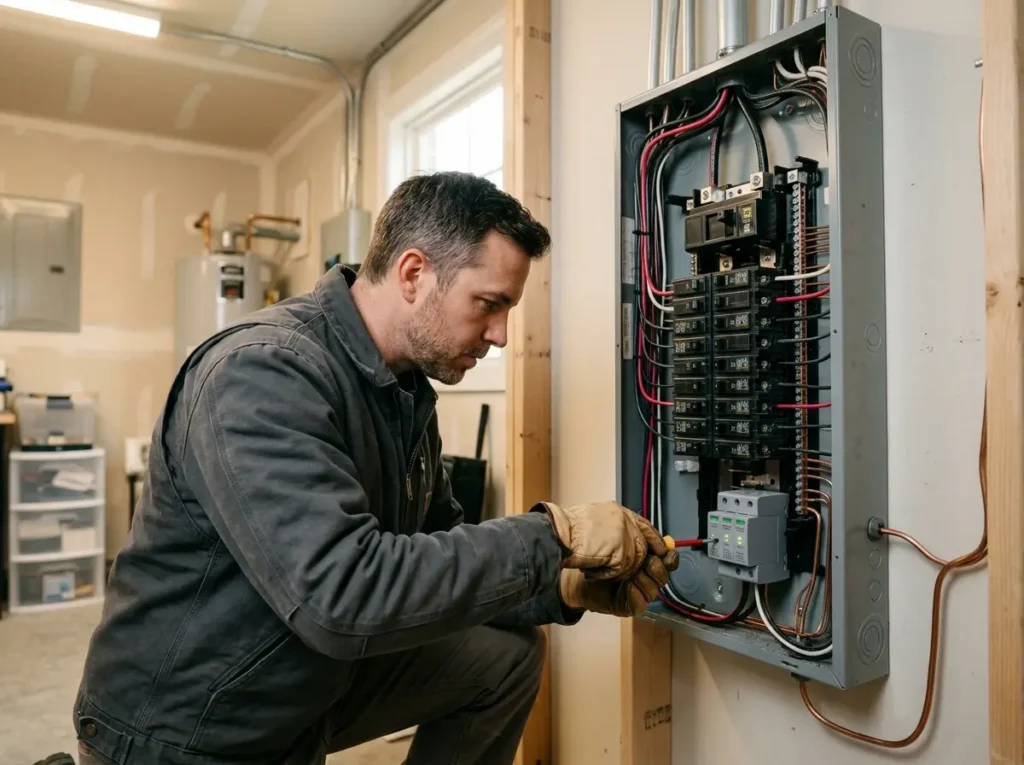
We start every project with a site visit to evaluate your existing electrical panel, available capacity, and preferred charging location in your garage or driveway. We perform a detailed EV charger load calculation using NEC Article 220 to determine if your panel can handle a new 240V circuit. If you have an older 100-amp panel, we may recommend an electrical panel upgrade for EV charger to 150 or 200 amps. Once we confirm capacity, we run new wiring, install the correct breaker, and mount your charger. Our services cover all residential EV charging needs:
- EV charger installation – Level 2 chargers for all EV brands: Tesla, Ford, Chevrolet, Hyundai, Kia, BMW, Rivian, and others
- Tesla wall connector installation – hardwired Tesla chargers with adjustable amperage settings (up to 48 amps on a 60A circuit)
- NEMA 14-50 outlet installation – 50-amp RV/dryer style outlet for plug-in portable chargers (Tesla Mobile Connector, etc.)
- EV charger load calculation – determining if your existing panel has capacity before we install anything
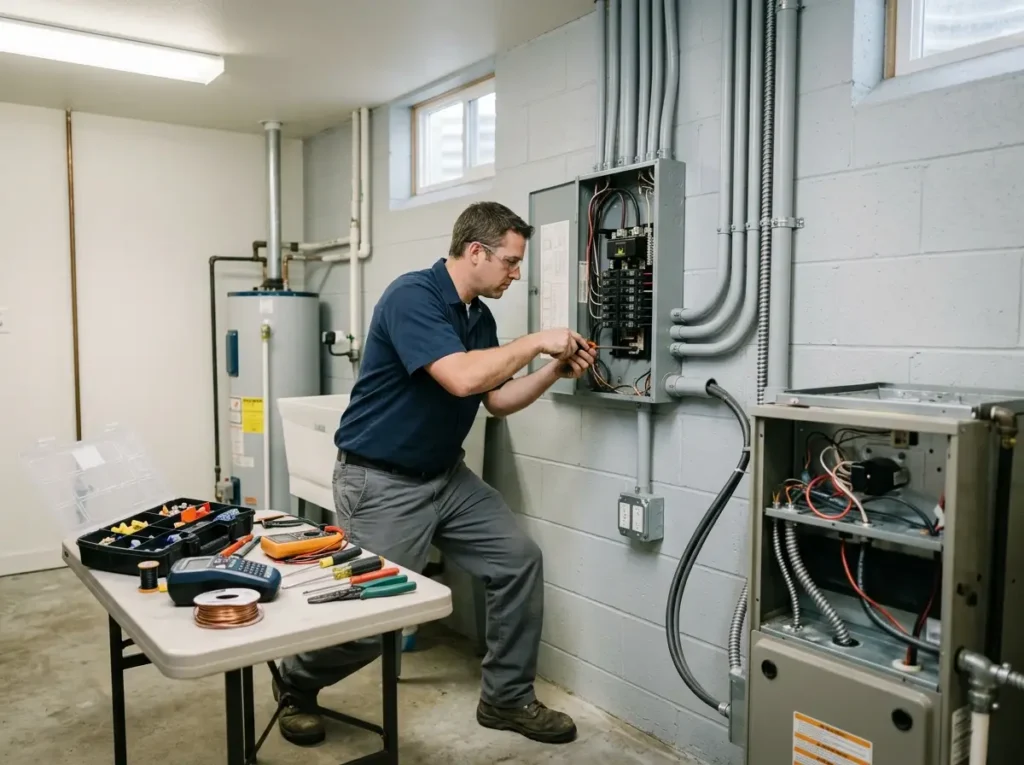
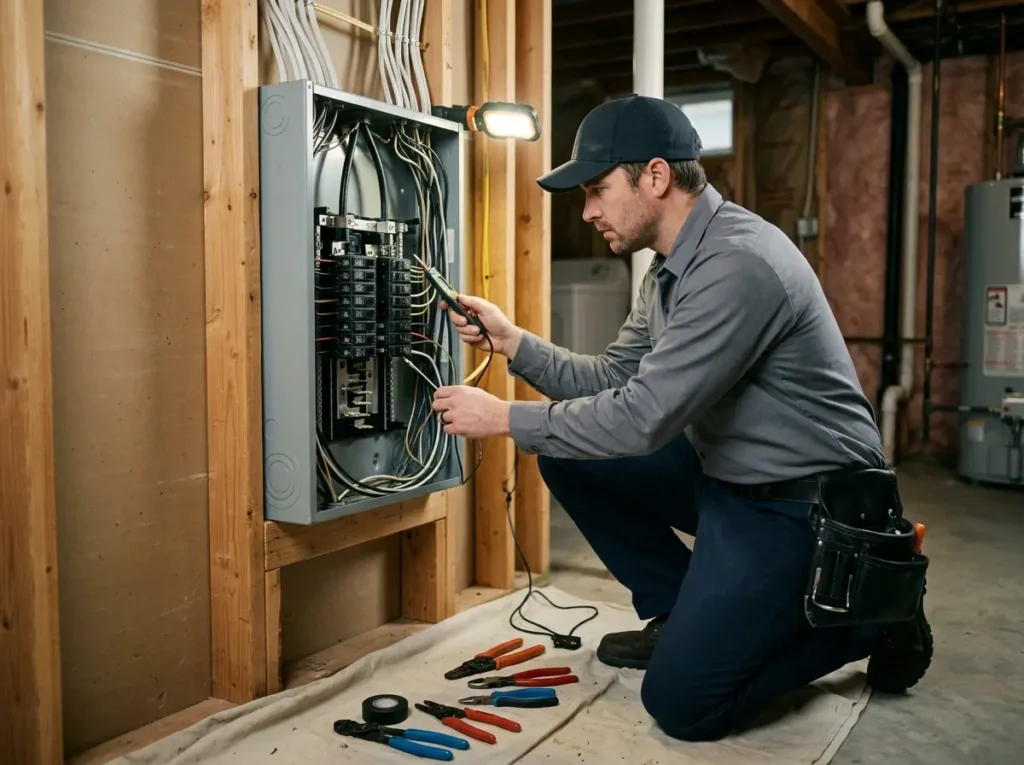
- Electrical panel upgrade for EV charger – upgrading from 100A to 150A or 200A to make room for EV charging
- Hardwired vs plug-in EV charger consultation – helping you choose: hardwired (more reliable, fewer failure points) or plug-in (flexible, can take charger when you move)
- EV charger permit requirements – pulling permits and scheduling inspections so your installation is fully legal and insurable
- Dual EV charger installation – setting up two chargers for households with two electric vehicles, including load sharing features
Common EV Charger Problems and How Long Installation Takes in Douglas
We frequently fix EV charger installations done by non-specialists or homeowners. Undersized wiring for the breaker amperage causes overheating and fire risk. Loose connections at the breaker or charger cause arcing and voltage drop. A panel that was never load-calculated trips the main breaker when the charger runs alongside the AC or dryer. No permit pulled means the installation might violate insurance policies. A simple NEMA 14-50 outlet installation in a garage with an existing sub-panel and available capacity takes 1 to 2 hours. Installing a Tesla wall connector installation with a new 60-amp circuit takes 2 to 3 hours. A full EV charger installation that also requires an electrical panel upgrade for EV charger takes 4 to 6 hours for the panel swap plus another 2 hours for the charger. Installing dual EV charger installation with load sharing (two chargers on one circuit that share power intelligently) takes 4 to 5 hours including programming and testing.
Why EV Charger Load Calculation and Electrical Panel Upgrade for EV Charger Matter for Your Douglas Home
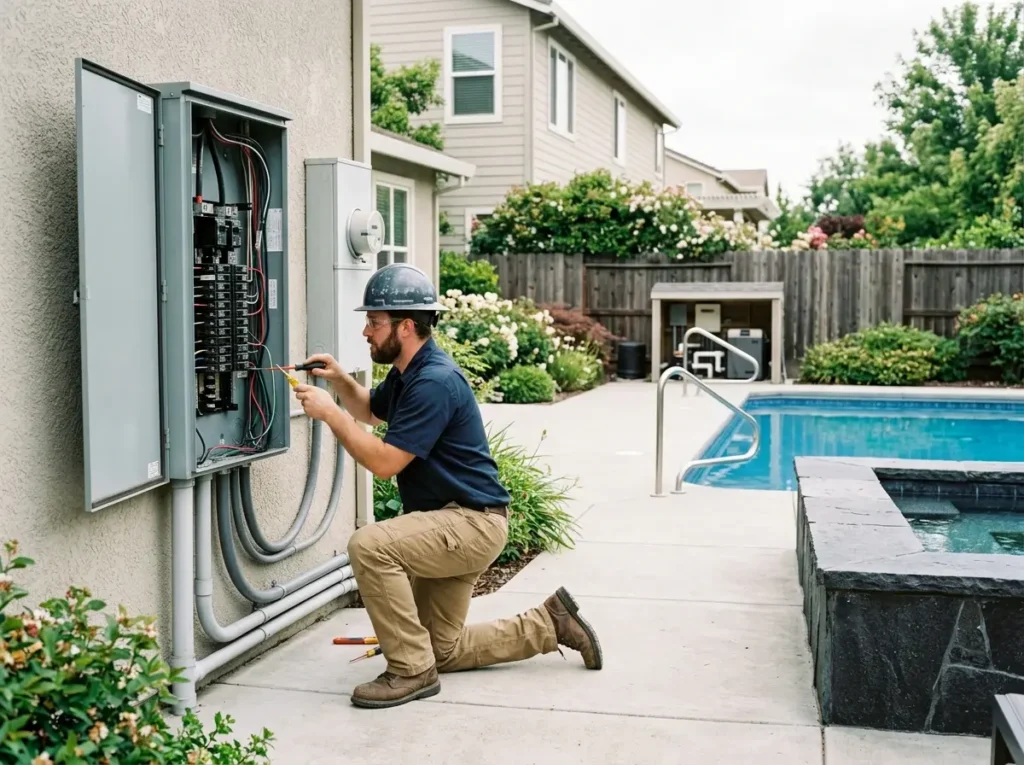
Most homes built before 2000 have 100-amp or 150-amp electrical panels. A modern home with central air (30-40 amps), electric dryer (30 amps), oven (40 amps), and an EV charger (40-50 amps) can easily exceed 100 amps when everything runs simultaneously. Without a proper EV charger load calculation, you risk tripping your main breaker repeatedly — or worse, overheating the main bus bars in your panel. An electrical panel upgrade for EV charger to 200 amps solves this problem by providing enough capacity for the EV charger plus all your existing appliances. For hardwired vs plug-in EV charger, we explain the trade-offs: hardwired has fewer connection points (safer, more reliable, can support higher amperage up to 48-80 amps), while plug-in via NEMA 14-50 outlet installation lets you take your charger if you move and allows easy replacement if the charger fails. Many Douglas municipalities require permits for EV charger installation; we handle EV charger permit requirements so you are fully compliant with local codes and your insurance remains valid. Our organization works exclusively in residential homes in Douglas — no commercial sites, no rushed work. For professional EV charger installation, contact our team today. We will perform your load calculation, recommend any needed panel upgrades, and provide clear pricing before any work begins.